

 Colombia
In this article
The cost of living abroad will shock you when you read this:
Just US$1,500 a month buys you a better life overseas than US$6,000 does in the United States.
How do I know? Because I’ve done it.
I’ve lived abroad for nearly a decade, bought property, gained residency in multiple countries, navigated their healthcare systems, built businesses, found love, and crafted a lifestyle that’s not just cheaper, but healthier, freer, and more fulfilling.
And I’m not the only one. Millions of Americans, especially those nearing or in retirement, are without fanfare doing the same.
In this article, I’ll break down my real monthly expenses while living abroad and explain the categories that offer the most savings for people like you considering a life overseas.
The State of US Cost of Living
Before we talk about how much cheaper life is overseas, we need to first set a baseline of what you’re paying now.
According to the U.S. Bureau of Labor Statistics, the average American household spends US$6,440 per month, totaling US$77,280 annually.
Let’s break it down:
- Housing: US$2,120 per month (32.9% of one’s expenses)
- Transportation: US$1,098 per month
- Food: US$832 per month
- Healthcare: US$487 per month
- Personal insurance & pensions: US$796 per month
- Entertainment: US$302 per month
These figures don't even account for taxes. Even in retirement, you could be sacrificing up to 40% of your income to the IRS, depending on your Social Security, pension, or IRA withdrawals.
A high cost of living isn’t an issue in and of itself. The problem arises when people don’t get what they expect out of the products and services they paid for.
So, I ask you, What do you get in return?
High stress?
Rising crime?
Bureaucratic headaches?
Crowded, drug-infested cities?
A political climate that feels perpetually volatile?
For millions of Americans, this feels unfair.
My Real-Life Cost of Living Abroad
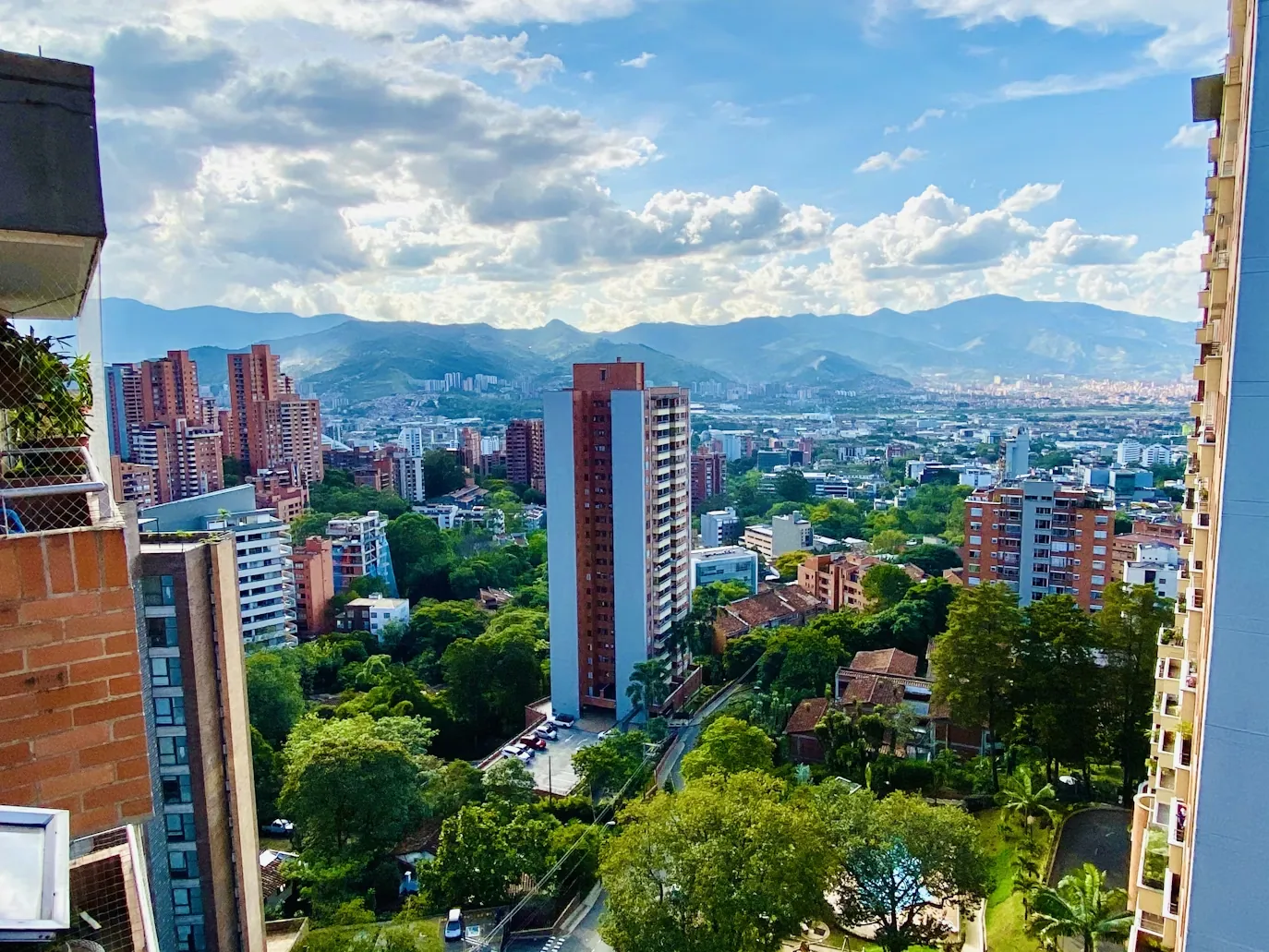
I live in Medellín, Colombia, right now. I have for the last four years.
It’s clean, relatively safe (if you take precautions), green, friendly, and extremely affordable, shockingly so for the many friends and family who’ve visited me here.
Here’s what I spend each month:
- Rent: US$600 per month for a brand-new, 3-bedroom apartment with two balconies, modern finishes, and an incredible view of the mountains
- Healthcare: US$80 per month for private insurance and US$30 for a same-day appointment with an English-speaking doctor. Specialists will even visit me at home for blood tests, massages, check-ups, etc. at no extra charge.
- Groceries: US$200-$250 per month. I eat fresh, local, and organic by default. Mangoes, avocados, and local coffee beans cost pennies here compared to the US$14/lb price tag you'd find in California.
- Housekeeper: US$250 per month for a full-time/live-in nanny, maid, or cook. We don’t currently hire anyone, but many expats do.
Total Monthly Cost , Under US$1,500.
Could I spend less? Absolutely.
Could I spend more? Of course.
But the key is that I’m living far better on 30-40% of what I used to spend in the United States. And I’m not scraping by. I’m thriving.
Who wouldn’t take that deal? A more inexpensive but better life abroad? Count me in.
How Life Abroad Slashes Your Cost of Living: By Category
Housing
Your rent or mortgage is probably the biggest line item in your US budget. It is for the wide majority of Americans. In fact, 32.9% of the average household’s expenses are rent- or mortgage-related.
Abroad? Housing is often your biggest savings.
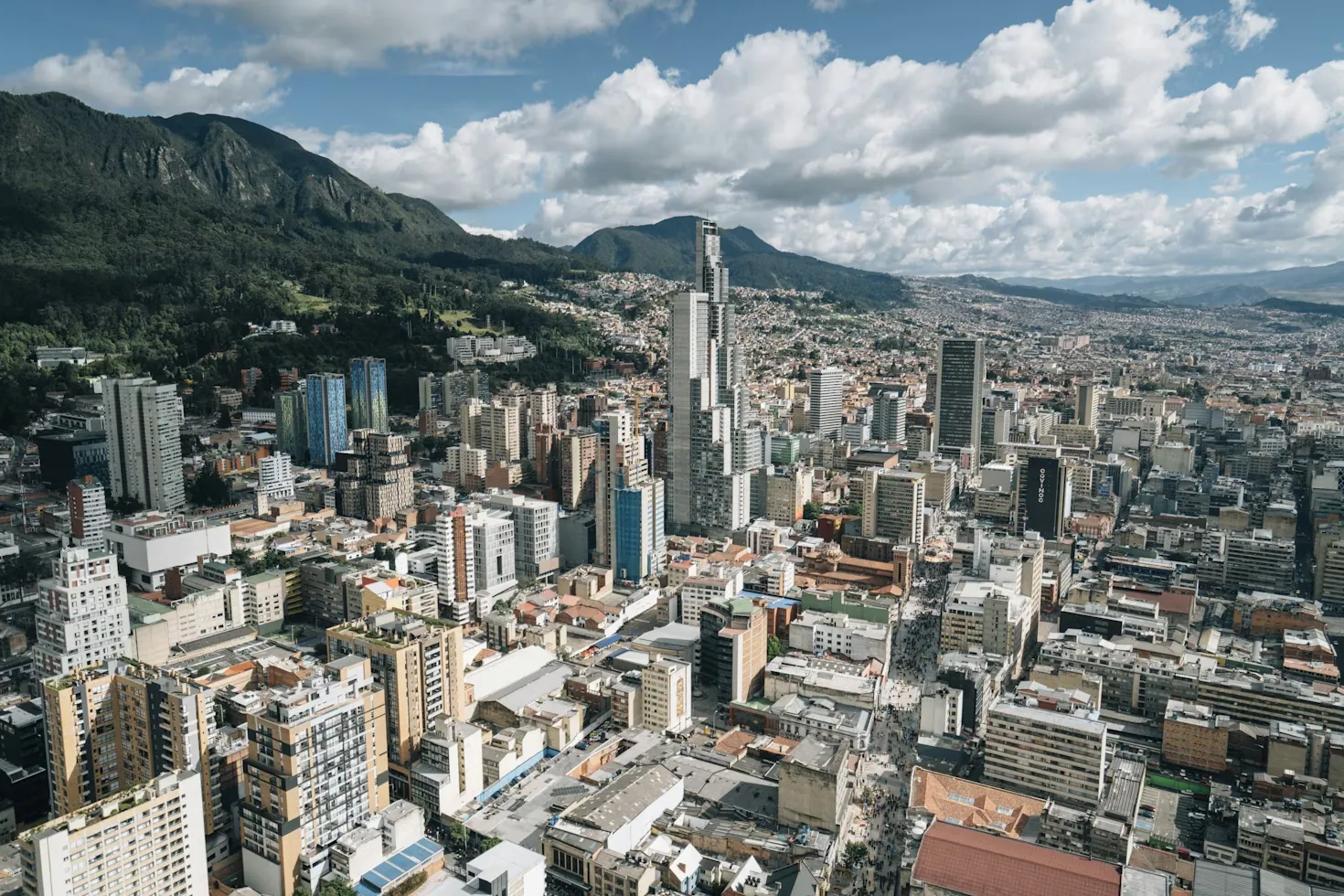
In Colombia, Mexico, Thailand, and much of Eastern Europe, you can find modern, furnished, two-bedroom apartments in safe, central neighborhoods for under US$1,000 per month.
Even in top European expat destinations like Spain, Italy, Portugal, and Greece, an American abroad can save significantly on their housing costs.
But it’s not all about savings.
Moving abroad enables Americans to afford much more luxurious stays for a fraction of what they would cost in the United States, especially if you rent for an extended period or purchase the property outright.
If you’re interested in buying a home abroad, you certainly can.
I purchased a brand new condominium in a nomad and expat hotspot in Colombia for less than what many Americans pay as a down payment. In places like Brazil or Nicaragua, I’ve seen beachfront condos sell for US$100,000-$200,000.
Savings certainly exist. You may just have to leave the United States to find them.
Healthcare
In 1980, healthcare spending was 8.8% of US GDP. In 2020, this figure doubled to almost 20% of GDP.
Of course, this would not inherently be an issue if the quality of the healthcare services doubled as well. But sadly, it has not.
Even with Medicare or employer-backed insurance, Americans are stuck shelling out thousands of dollars each year in premiums, co-pays, and surprise bills.
The average American will pay US$165,000 for healthcare in their retirement years. This is absurd.
Abroad?
You get world-class, public or private care for a fraction of the price, sometimes no price at all!
And as is the case in most of Latin America, healthcare services may come to your home at no additional cost. Here in Colombia, I’m just a text away (from the comfort of my couch, mind you) from a massage, haircut, blood test, or any other health service.
Food
If you’re used to Whole Foods prices, get ready for a shock: Fresh, local, organic foods are often the default, not the premium option.
No wonder almost all the global blue zones are located outside the United States. People eat healthier and live longer in Costa Rica, Italy, and Japan.
But not only is food healthier abroad, it’s more inexpensive too.
Dining out can cost less than US$20 for two, including wine, in parts of Spain, Greece, or Mexico. That espresso you crave? It’s €1 in Italy.
And no tipping culture or surprise fees.
Transportation
Here’s the big one: I don’t own a car anymore.
In Medellín, I take clean, safe metro rides or Ubers that cost US$2-$3. I’ve even taken four-hour, multi-city Ubers that set me back less than US$50. In New York City last summer, I paid US$40 to go 10 blocks. The difference is palpable.
Without a car, I’ve saved a tremendous amount of money, time, and headache. No car payments, gas, insurance, or surprise repairs.
When you live within walking distance of your market, church, park, convenience store, gym, mall, and favorite restaurants, you live a happier, healthier life. I’m proof!
Is Life Abroad Always Cheaper?
The short answer? No.
But the longer answer is that it can be. If you want to reduce your cost of living and live a better life, you can. If you have no problem with your current budget and spending habits, you can live the same, no, an even better, lifestyle abroad for an equal price.
Just like in the United States, your cost of living depends entirely on what you prioritize and how and where you live.
Your money stretches farthest in the following countries:
- Latin America: Colombia, Mexico, and Ecuador
- Southeast Asia: Thailand, Vietnam, Philippines, and Malaysia
- Eastern Europe: Bulgaria, Hungary, Poland, and Montenegro
- Southern Europe: Portugal, Spain, Italy, and Greece
You can live very comfortably on under US$5,000 per month in most of these places, even the most exclusive cities in each country. We’re talking central locations with great healthcare and amenities. More value and a better quality of life than what an equal cost of living could buy you in the US.
And if you need help choosing where to move overseas, the Freedom Files immigration and relocation experts can help you weigh destinations and identify the best opportunities based on your current circumstances, budget, and goals.
The Bigger Shift Is …
Yes, you’ll also be able to access a better life for less if you play your cards right. But what you gain by moving overseas is something bigger, much more important than a number in your bank account.
When your monthly expenses drop by 20-80%, you don’t have to work for survival. You don’t have to worry about the next big purchase and whether you’ll have to take out a loan. You don’t have to ask yourself, "How long do I have to maintain this?"
Instead, you buy back your time, your energy, and your joy.
You eat better, sleep better, move more, and stress less.
This is not about saving money. It’s about living the life you’ve always dreamed of, that you were always capable of, you just didn’t know it existed.
The problem is, Most people wait too long to execute on their plan.
They work an extra ten years, sacrifice their health, and cut back on their goals just to “get by.” All because they never looked at what was possible outside their own country.
Don't let that be your story.
Ask yourself: What’s life costing you to stay where you are?
Want Help Exploring Your Options?
To get started on your exploration of life abroad, take the Plan B Blueprint. Answer 10 quick questions and you’ll get a report that matches you with the residency and citizenship programs and destinations that fit your situation and goals.
Or skip the wait and book a no-pressure Freedom Consult to get absolute clarity on your next steps.
If you want more like this, subscribe to the newsletter so you don’t miss any of the opportunities our private list hears about.
Video Transcript
Click to read the full transcript
Video Transcript
Click to read the full transcript
Just $1,500 a month buys you a better life overseas than $6,000 does in the USA. How do I know? I've lived abroad for nearly a decade, bought property, gotten residency in several countries, used the health care system in a few, met my fiance, scaled a couple businesses, and built a life that's not just cheaper, but healthier, freer, and more enjoyable. I'm not the only one. Millions of Americans are quietly doing the same. So today, I'm breaking down my real monthly costs overseas, what categories will save you the most if you choose to move abroad, which countries give you the best value, and how you can figure out if this move makes sense for you. In order to find out if you'd save big time by moving abroad, we have to establish your baseline first. What does it actually cost to live a decent middle to upper class life in the US? For most soon to retire, retiring or retired Americans, it's somewhere around $5,000 to $10,000 a month. And that's just the basics. Rent mortgage, that's $2,000 to $4,000 a month. Healthcare and insurance, $1,000 to $3,000 a month. Groceries, $750 to $1,500 a month. Transportation, that's $1,000 a month. Miscellaneous, just an extra $2,000. And forget about taxes. Even in retirement, you could be handing over 15 to 25% of your income depending on your social security and IRA distributions. And what do you get for that money? Stress, traffic, poor service at the DMV, shootings on the news, and that's not a political statement, by the way. Every year it feels like things get more expensive and provide even less than before. That's a terrible quality of life formula in my opinion. I'm not blaming you or anyone for that matter. I was no different. I was living in an American city just getting by before I left the country. I spent just about as much as I made. And after taxes, man, I was underwater. I'm just lucky I had a cushion to fall back on and was adventurous enough to want to experiment abroad. Now, I can't imagine living back in the US. That's the truth. And that's what's pushing so many Americans, especially those nearing retirement like you, to ask, "Is there a better way?" Well, the answer is yes, there is. Let me give you a snapshot of my real expenses right now living in Colombia. My rents about $600 a month for a brand new three-bedroom apartment with two balconies, modern finishes, and an incredible view. Now, here's the part no one talks about. Healthcare. I pay about $80 a month for private insurance. I pay about $30 to see a private English-speaking doctor, same day appointment, and the care. I haven't used my healthcare policy much, but I've had friends who have and have had nothing but great things to say. I do get regular blood tests and health checkups at my home, as most medical services come to you for no extra charge. Yeah, I'm serious. Groceries, $200 maybe to $250 a month. I eat fresh, local, organic by default. Mangoes, avocados, coffee beans. They could cost, I don't know, $14 a pound in California. Here, they're essentially pennies. Comment below and tell me how much you're spending on groceries per month right now in America. I can't wait to see these numbers. Full-time cleaner, $250 a month. That one usually surprises people. I don't hire this out right now because we don't need the extra help. But if we did, a full-time nanny or cleaner, maid, or cook would cost just about $200 to $300 a month. So, the total monthly cost under $1,500 a month, and I live well. Could I live cheaper? Absolutely. Could I spend more? Definitely. But the point is this. for 60 to 70% less than what I would spend in the US. I now live a healthier, freer, and more peaceful life in Colombia. And I'm not scraping by. I'm thriving. Of course, Colombia is where I live currently. I've lived in 10 other countries abroad, and my costs were similar. Let's break it down by category. How much cheaper can life be abroad? Housing is often your biggest monthly cost in the US. abroad. It's often your biggest savings. In places like Colombia, Mexico, the Balkans, and parts of Southeast Asia, it's common to find a quality two-bedroom apartment for under $800 a month. If you buy property, even better. I bought real estate here in Colombia, and I paid less than what my friends in the US spend on a down payment for a similar build. Beachfront Place in Brazil or Nicaragua, just $100,000 to $200,000 if you find the right property. What would you do with all that savings? By the way, the Freedom Files can help you with your international property search, particularly if you're in need of residency as well. Why not kill two birds with one stone, right? Okay, this one stings for a lot of Americans because back home, even with Medicare or good insurance, you're still paying hundreds per month, plus co-pays, deductibles, and surprise bills, usually it comes out to thousands per month. Abroad, you can get worldclass private care, often delivered to you at home, like I'd mentioned before, for a fraction of the cost. Food abroad is insanely affordable when you shop locally and eat fresh, which is often the default, especially in the Mediterranean. Even dining out can cost less than $20 for two in a town center in Greece or Spain. That morning espresso you love when you wake up, that's just €1 in Italy. No tipping culture, no hidden service fees, nothing. This was one of my most shocking realizations of life abroad. I don't own a car anymore. I don't need one. Uber is $2 to $3 a ride. The metro here in Medigene, where I live, is clean and safe. And let me tell you guys a story. A friend from Manhattan, from New York City, just visited me a few weeks ago, and we had to go about 4 hours in car to a day trip. And the final bill came out to just $40 here in Colombia. I was in Manhattan last summer and regularly paid $40 to travel 10 blocks. In most expat friendly cities, you can walk as well or take cheap taxis everywhere. No gas bills, no car insurance, no random thousand mechanic visits. Not owning a car has saved me boatloads. So, let's talk about what all of this means. You don't just save money when living abroad. You buy your sanity back. You buy your time. You buy freedom. When your expenses drop by 50 to 70%, you're no longer working for survival. You're living for joy. It is a total and beautiful mindset shift that I've seen countless retirees go through. Now, let's go back to the original question. How much cheaper is life abroad than in the USA? Yes, it's cheaper in almost every meaningful way. How much? Uh depends on you. It depends on your budget, your goals, your destination obviously, and your comforts. But your money stretches further in Spain, Thailand, and Ecuador. You can afford better care, better food, and more help in Italy, Turkey, and Mexico. You stop working just to keep up and start living how you want in the Caribbean, Greece, and Malaysia. But the biggest shift isn't in your wallet. It's in your mindset. You start asking new questions. Not can I afford to retire, but where do I want to wake up every day? Not how long do I have to work, but how soon can I live the life I actually want? Most people won't even consider moving abroad until it's too late. Until they've worked an extra 10 years, downsize their dreams, and sacrifice their health all just to get by. Don't let that be your story. That's not the right way to go out. If you're over 45, 50, or even 60 and wondering how much better life could be, take the Plan B Blueprint at freedomfiles.co/begin to find the residency or citizenship program and destination that fit your situation and goals. Or schedule a call with my team and me. We'll show you what's possible based on your budget, your timeline, and your goals. No pressure, just clarity. And in the next few weeks, I'm filming from Spain, then Italy, then Greece. So, hit subscribe and let me know what you want to know about what this life really looks like on the ground. Until then, ask yourself the only question that really matters. What's life costing you to stay where you are? [Music] [Music]





 Mexico
 Panama

 United States